Contact Us
 Donate
Home Modifications – What Happens When You Move?
Moving to a new home is already challenging without the added complexity of accessibility considerations. We have gathered key information to help guide you when the moving process involves home modifications, whether in your current home or your new one. Planning ahead can make the transition smoother for everyone involved. Key considerations include identifying which modifications can be transferred and which need to be newly installed, and deciding in advance what to do with any modifications you no longer need.
Planning Ahead Before Moving
People often spend significant time designing their homes to meet their exact needs and daily routines. When beginning the moving process, it is important to consider how a new home will continue to support those needs and provide optimal comfort. Some modifications can be easily removed and brought to a new home, while others may need to be newly installed. Thinking ahead about which features you want to keep can make both the moving process and the adjustment to the new space much easier.
Evaluating the new home is equally important. The space may already include accessibility features or be better suited to your lifestyle, reducing the need for additional modifications. Understanding this ahead of time can help you decide whether bringing existing modifications is necessary.
Before moving, creating a checklist of tasks and key needs can help you stay organized and ensure nothing is overlooked during the planning process.
Transferring Home Modifications
When deciding which modifications to bring with you, it is important to determine whether they will be compatible with your new home. Some features may not fit properly due to differences in layout or size. Measuring both your current equipment and the new space is an effective way to ensure a proper fit.
In some cases, purchasing new modifications may be more practical than relocating existing ones. Certain features can be customized to better suit the new space, improving both safety and usability. However, many portable or non-permanent modifications can be easily transferred without significantly impacting your moving timeline. These may include portable ramps, shower chairs, handheld showerheads, bed rails, and motion-sensor lighting.
Unwanted Modifications
A common question during the moving process is what to do with modifications that are no longer needed. There are several options, including donating, recycling, or leaving them in place.
Donating items such as portable ramps can benefit others who need them, especially since these items can be expensive when purchased new. They may be donated to resale stores, community organizations, senior centers, or local churches. Certain items, such as plastic shower chairs or grab bars, may also be recyclable depending on local guidelines.
Leaving modifications in place is another option. Features like grab bars, widened doorways, and walk-in showers may appeal to future buyers, particularly older adults or those planning for accessibility. This also allows new homeowners to decide which features they want to keep or remove. Considering all of these options can help you determine the most practical course of action.
Other Considerations
It is important to consider additional factors that may impact your move when home modifications are involved, including:
- Warranties
- Compliance requirements
- Buyer preferences
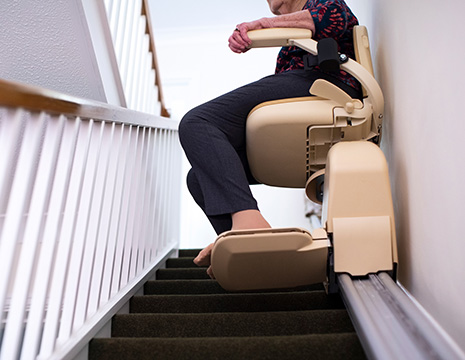
For modifications such as stairlifts or built-in ramps, warranties may still be in effect. Coverage varies by manufacturer and installer, so it is important to review the terms. While warranties can sometimes be transferred to a new homeowner, they are rarely transferable to a new location. Keeping all manuals, receipts, and installer information is essential.
Compliance with building codes and community regulations is another key consideration. Requirements vary depending on location, property type, and the modification itself. Some changes may require permits, especially if they involve structural alterations. In townhomes or apartments, homeowners’ association (HOA) rules may also require approval before making modifications.
Buyer preferences can also influence your decisions. Some buyers may see accessibility features as valuable, while others may view them as additional work. Buyers who do not want the modifications may request their removal or negotiate a lower price to account for future changes. If you plan to leave modifications in place, it is helpful to provide documentation such as permits, installation records, warranties (even if not transferable), manuals, and service history.
How UDS Can Help
There are many factors to consider when managing home modifications during a move. Planning ahead is essential for a smooth and successful transition. Deciding which modifications to keep, transfer, or leave behind is one of the first steps. From there, you can determine how they will function in the new space. Unwanted modifications can be donated, recycled, or left for the next homeowner, depending on your preference and the buyer’s needs.
UDS provides a wide range of home modification solutions designed to improve safety, accessibility, and independence. These include options such as grab bars, stairlifts, widened doorways and hallways, walk-in showers, and shower seating.
UDS also offers a detailed livability assessment to evaluate your needs and recommend the most effective modifications. In addition, they identify potential installation challenges, provide cost estimates, and offer guidance on how modifications may impact future resale value.
UDS proudly serves most of eastern and central Pennsylvania. If you would like to learn more about in-home care services, you are encouraged to contact a member of the team.