Contact Us
 Donate
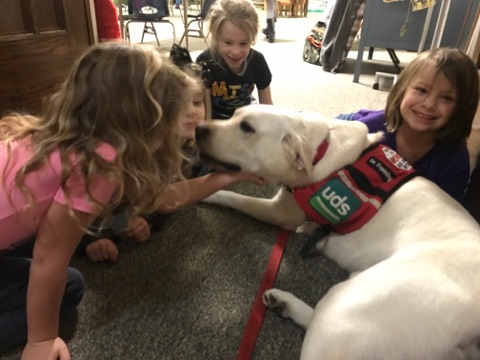
Service dogs offer powerful support in classroom settings for students of all ages, contributing to multiple areas of development. By supporting the growth of trust and empathy, as well as preventing social isolation, service dogs in the classroom are proven to foster the socio-emotional development of children. The cognitive benefits that service dogs provide, like reducing stress and promoting motivation, are another way that service dogs can improve classroom learning. Overall, the influence of service dogs extends across several key areas of student development, from emotional well-being and motivation to behavior and academic learning.
Here are four key areas that the influence of service dogs can improve in the classroom.
Socio-emotional Benefits
In general, dogs have been known to bring a calming relaxing presence, which is why they are often referred to as “man’s best friend.” This stands true even with children. In fact, dogs have an even more special relationship with kids than adults in some cases. The relationship formed between the service dog and the students has the unique ability to help the students build skills like trust and empathy. Having service dogs in the classroom can also help prevent social isolation by bringing students together and providing comfort to children who may feel excluded, helping them feel valued and cared for. They serve as a non-judgmental companion and can be good listeners for children who are young and still mentally developing. Together, the teaching and social benefits highlight how classroom dogs can play a meaningful role in supporting children’s emotional and social growth.
Cognitive Benefits
In addition to supporting emotional well-being, classroom dogs also play an important role in enhancing cognitive and academic skills. They have been known to help develop functioning skills, as well as boost problem solving skills. Service dogs have even been known to improve relaxation, motivation, and areas of attention. They can be used to provide hands-on learning experience to children in a controlled environment. Dogs in classrooms can also help with language development, as interactions with the dogs teaches children how to explain actions and situations in more detail.
There are also benefits regarding stress, leading to improved cognitive behavior. Stress has a direct correlation with concentration. When stress decreases, productive concentration increases, improving performance. Dogs have been proven to be stress relievers, making it a potential starting point for improved performance.
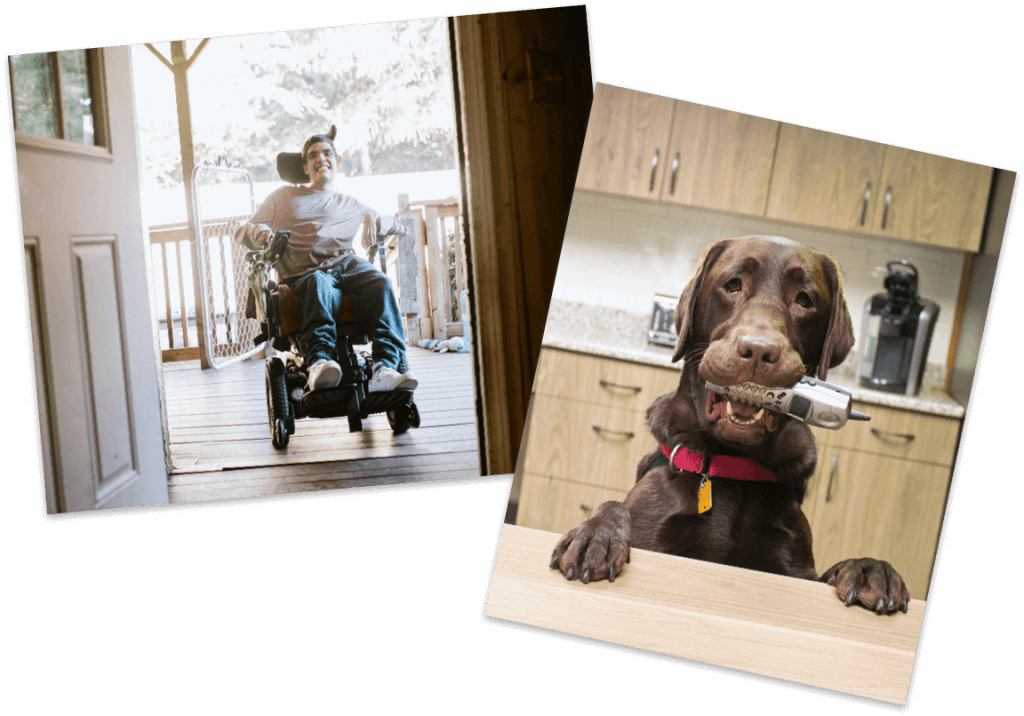
UDS Can Help You Live A Fuller Life With Our Comprehensive Services:
Planning & Support – Our dedicated planning & support teams help manage the care and services you need.
Personal Care & Independence – We’ve helped people with disabilities live more independently in their own homes since 1965.
Enrichment & Life Skills – Our variety of programs is dedicated to building skills for living well with a disability.
Extra Motivation, Less Negative Behaviors
When students are excited to come to school, they are less likely to make excuses to skip class and more willing to participate in learning activities. Many teachers have noticed that when dogs are brought into classrooms children are excited to interact with them, and their incorporation into classroom settings can promote higher attendance and engagement. Dogs can also serve as active participants in the classroom, encouraging students to engage in ways they otherwise might not. For example, students who may have never voluntarily picked up a book are more willing to read aloud when reading to a dog, creating a low-pressure and motivating learning experience. Time spent with a service dog can also be used as a reward system, such as allowing students to interact with the dog after completing assignments on time. They can also help create a more welcoming and supportive classroom environment. Their presence can make the classroom feel more personal and familiar, helping students feel comfortable in what might otherwise be a new or stressful setting. This sense of comfort can be especially beneficial for students who struggle with anxiety or adjusting to structured environments, further supporting their overall engagement and success in the classroom.
Learning Support
The use of service dogs in the classroom is not limited to young children. Some schools have opted to use service dogs in higher levels of education. Many universities will bring service dogs to their campuses during finals week, typically a high stress period for young adults. This has been proven to decrease stress levels and improve concentration by allowing time for needed mental breaks. At the high school level, service dogs provide similar benefits during state testing periods or during college prep courses. They can be mood enhancers, which also helps boost learning experiences.
Elementary schools may opt to use service dogs in the literacy programs by having students read to the dogs in the classroom. This provides them with a physical, non-judgmental presence to practice their reading skills with. They also give students the hands-on opportunity to learn about animals, maybe even assisting with a science program.
How UDS Can Help
Service dogs don’t just support students in classroom settings, but also help teachers create a more comforting learning environment for their students. They are proven stress relievers for people of all ages and can help foster developmental growth through hands-on lessons and experiences. UDS is proud to offer dogs for the classroom that are specially trained to help children that struggle with learning. Our goal is to have a positive impact on learning growth in the classroom through our service dog program. We also offer a service dog program for individuals who have a mobility disability, autism, or Veterans with PTSD. At UDS, we pride ourselves on being with you every step of the way, and making ourselves available for any questions and guidance. UDS serves most of eastern and central PA. For more information, please contact us and fill out your information to learn more about our services.